
Now, seemingly for the first time, millions of Americans see the ugly side of the American dream. They, meaning White Americans, are protesting in the streets about violence against Black Americans as if there weren’t hints of the nation’s sins taught in grammar school and high school history classes. Most Americans I’ve encountered—until three months ago—don't give a hoot about history. What’s the point of history? Can’t get a job with a history degree. We are our history. "Those who don't know history are doomed to repeat it," said British MP Edmund Burke some 240 years ago.
We're repeating it.
A portion of America today looks at its history through the lens of 21st-century anger. They have ignored the one historical fact: With the U.S. Constitution, America's founding fathers legitimized the greatest sins of humankind, a sin shared and fostered by other great countries such as Great Britain, France, Portugal, Spain, and minor kingdoms along the coast of western Africa.
They--all of them--set the stage for the most mortal war in the nation's history, the Civil War. Finally, they set the stage for Jim Crow, de jure and de facto segregation, the murders of thousands in towns like Rosedale and Greenwood. And more.
Somewhere in the psyche of White Americans, the Civil War absolved us from that sin. The immigration in the late 19th and early 20th century left us untainted by the sin. Northerners looked at the South as the Eve and serpent to their Adam. Prior to the 1960s, hell today, they’d say, “Tut, tut, tut. Isn’t it terrible that Emmett Till was hung because he offended a white woman? Do you know he was only fourteen?” European Americans went no further in 1955 and long after. Here’s why history is important. Did you know that the white woman recanted her accusation? Did you know that his admitted murders were acquitted by an all-White jury? Did you know that he was not the first or the last?
Now White Americans are meeting their doom. They have set the stage for repetition.
/https://public-media.si-cdn.com/filer/f1/dc/f1dc6a4c-e576-4685-b687-a157e2a6f22d/screen_shot_2017-01-19_at_12055_pm.png) The Equal Justice Initiative, Lynching in America, documented 4000 African Americans lynched between 1877 (most or less the end of Reconstruction) to 1950 (four years before Brown vs. the Board of Education). The map shows lynching around America. It was created by Monroe Work Today. It’s not named for President James Monroe, a slave owner, but for Monroe Nathan Work, who compiled data about lynching.
The Equal Justice Initiative, Lynching in America, documented 4000 African Americans lynched between 1877 (most or less the end of Reconstruction) to 1950 (four years before Brown vs. the Board of Education). The map shows lynching around America. It was created by Monroe Work Today. It’s not named for President James Monroe, a slave owner, but for Monroe Nathan Work, who compiled data about lynching.Lynching has been ignored by a vast majority of White Americans. They don’t get hit by a lightning bolt of fear when they see a noose hanging from a tree. A noose is not frightening. It's a knotted rope with legitimate functions. It’s not the noose that strikes fear but what it symbolizes: the ability of any White American to murder a Black American without ever serving time and sometimes being cheered for the lynching. That legacy flooded the imagination of NASCAR driver Bubba Wallace (an African American) when he saw a noose in his garage. (An investigation indicated the noose had nothing to do with Bubba Wallace.)
Obviously Donald Trump, who more than once declared himself a genius and a person who knows everything, is a moron when it comes to our nation’s legacies. DT rubbed Wallace’s wound with salt. He ridiculed Wallace, and his Administration’s spokesperson implied Wallace was committing a hoax. This is racism. This is defamation. DT was egging on his out-of-sync supporters who cheer and roar during his semiliterate speeches. In doing so, President Blubber-butt has become a symbol—the symbol of what is wrong with too many White Americans. They don’t know their history, and when the lights go out at night, they don’t care.
Repeat, repeat.
These symbols oppress, intimidate, and punish. DT’s lack of empathy for Wallace and the legacy that haunts all adult African Americans brings back the hatred of presidents such as James Monroe, Andrew Jackson, James Polk, Andrew Johnson, Woodrow Wilson, Calvin Coolidge, and Ronald Reagan.
Like most symbols, we don’t “see” the attributes associated with them immediately. Think Santa Claus—chubby, old man in a crazy red suit. Meaningless. That is until society tags the image. Then symbols attached themselves to others: Santa and Rudolf the Red-Nosed Reindeer (neither having anything to do with the birth of Jesus). They have a snow ball effect in December, as symbols of good cheer and human kindness. One legacy builds on another.
The lack of recrimination for lynching a Black man snowballs into the lack of recrimination of police officers killing Black men. For every Black man killed, there’s a ghost of lynching past haunting America, especially Black America. Most White Americans cannot see the ghost. Neither they nor their forebears saw a family member, neighbor, or friend lynched. They don’t know the history of lynching. They don’t live with police violence. They don't feel the connection. (They could empathize with a little effort.)
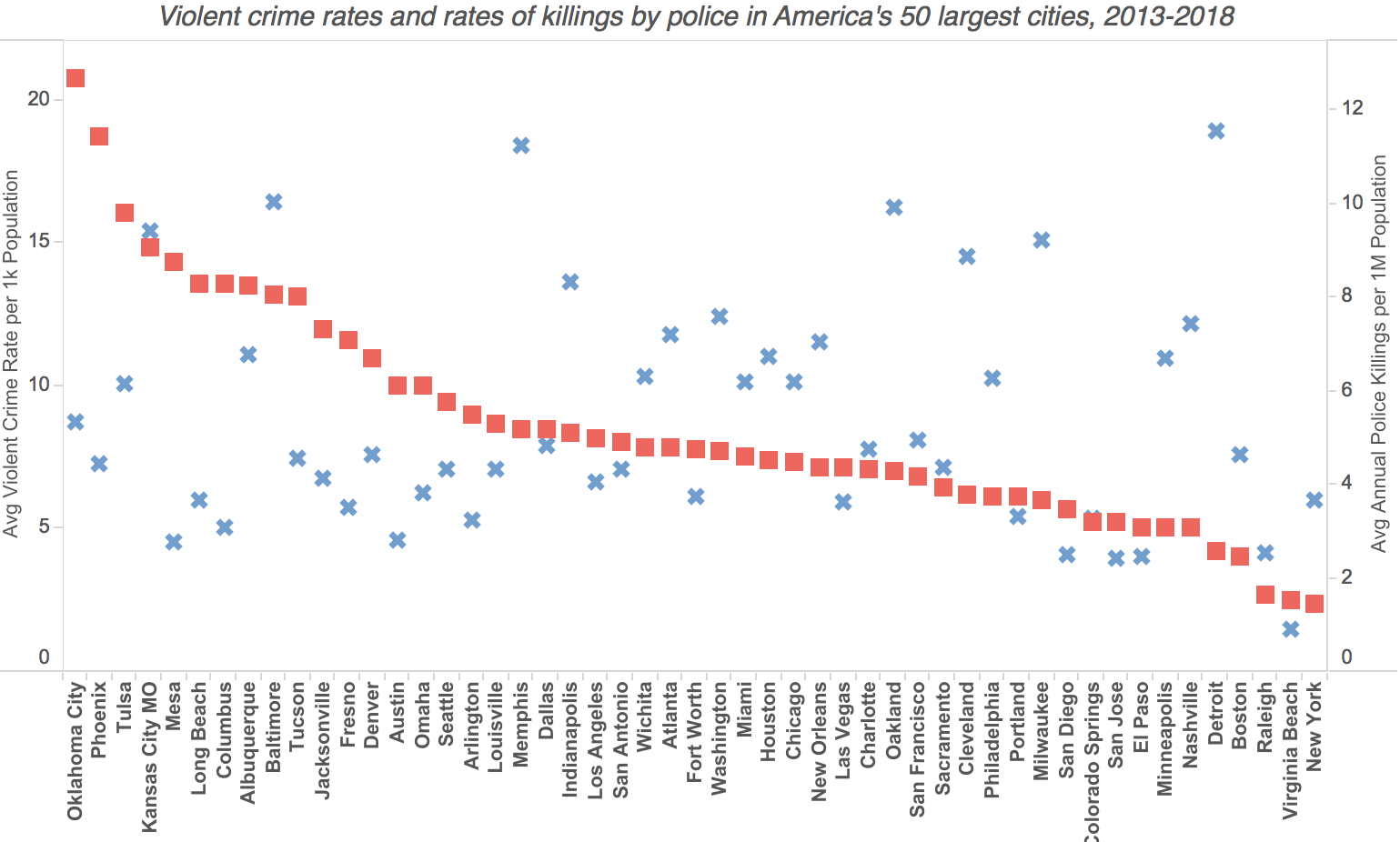
The experiences aren’t there for White Americans, but the statistics are. Look at the ones gather by Mapping Police Violence.
- African Americans are three times more likely to die at the hands of police than European Americans.
- African Americans are 1.3 times more unlikely to be armed than European Americans.
- African Americans are six times more likely to die at the hands of police in Oklahoma than in Georgia.
- Eight out of the 100 largest police departments in the U.S. kill African Americans at higher rates than the U.S. murder rate.
- Ninety-nine percent of killings by police between 2013 and 2019 have not resulted in charges against the police.
- Between 2013 and 2019, 1944 African Americans have been killed by police.
- Some may say that is because African Americans live in violent cities. That argument does not hold water. See the MPV map.
Initially a few of these deaths sparked the BLM movement protests throughout the U.S. and the world. Those deaths represent only the tip of the tip of a large iceberg. The leaders of America are like the captain of the Titanic, sailing full steam ahead without regard for the nation's legacy. There's a preference for ignorance and fears.
Compare the data between lynching and police killing of African Americans. They aren’t parallel but one echoes the other. Both rationalize the killing of African Americans.
Ignorance and fear modified the lynching legacy. Those two elements have enable too many Americans to pass the burden of "lynching" African Americans to the police.
"I never did that," you may claim. Didn't your silence allow it?:
There has been too much silence in the White community. European Americans don’t feel the consequence of these legacies. It hasn’t visited neighborhoods, families, friends, and forebears.


No comments:
Post a Comment